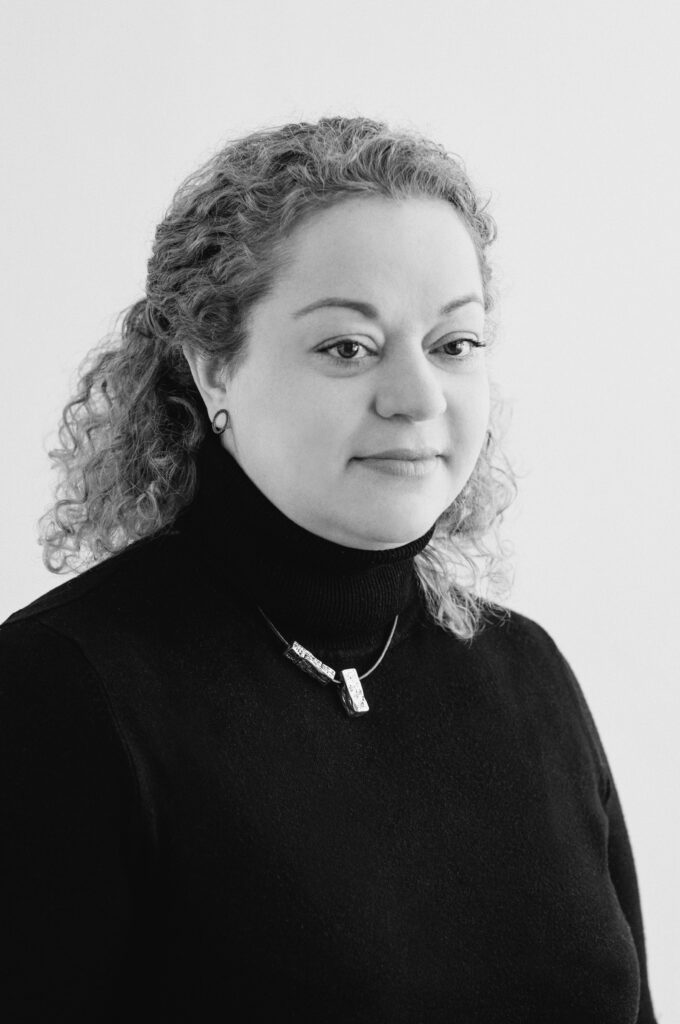
City: Luhansk.
January 2022. Responses provided in Russian.
1. What was your summer like in 2014? What prompted you to leave or stay?
I would love to write, “I had a good summer,” but no. The longest summer of my life. For the first time, I dreamed that it would end as soon as possible. It turned out that I stayed in Luhansk until August 26, the decision to leave was not spontaneous; it was the only possible one.
To be in a war and not take part in combat it is foolish. When armies are already shooting at each other, no one will pay attention to civilians—neither the attacking side nor the defending one. We interfered with both. No shell will bypass your house because there are “your” people there. I still don’t understand those who accuse the Ukrainian army of “shelling.” War is when everyone is shooting everywhere. And completely uncontrollable crowds of terrifying people on the streets, hordes of uncontrolled killers with weapons did not contribute in any way to a different resolution. I see no particular heroism in staying under occupation. If the city is to be liberated, we, peaceful residents, will only hinder our army. But this understanding did not come immediately. To realise this, I had to stay in the epicenter of the war for the most horrifying three months of my life.
2. Is there a story of yours or your close ones that you would like to share? What struck you the most?
My story is not unique; there were many like it. In early July 2014, they took my closest person “to the basement.” For almost two months, I didn’t know if he was alive or if they had “let him go,” as they told me every day. But there’s no point in talking about basements and prisons—everything has been documented by eyewitnesses. However, it’s hard to imagine for those who haven’t experienced it. If I may, I’ll share a vivid memory from that time.
In our city, there used to be many roses. They survived the crash of the nineties, and they were recently replanted on the streets. Yellow-pink, white, and standard red ones beautifully adorned our unattractive city. I pull my cart with empty bottles along the long flowerbed, thinking, “How do they survive? There has been no rain for two months, the heat is unbearable, and yet, look, they bloom and don’t wither.” A bit further from me, three more women with similar carts and bottles are walking. They move slowly, shoulders raised to their ears, backs bent—a quintessence of despair. (Note: From August 2014 in Luhansk, there was no water, electricity, communication, and food supply for 40 days.) Suddenly, a huge truck with a long “Blue fountain” reservoir (a water brand popular before the war, later confiscated by the brave “militants”) emerges. Behind it is a green minibus. “Militants” in camouflage easily jump off the truck, awkwardly unwind hoses, and… start watering the roses. WITH WATER! From the green minibus, well-dressed and apparently clean people with cameras and fluffy microphones emerge. I stopped my two-wheeled vehicle and decided to observe the shooting. And those aunties… Seeing water pouring onto the ground, for which they break their backs every day, tearing muscles, dragging burdens, one quietly sank to the asphalt and began to fall on her side. The other, grabbing two carts, rushed to the water:
- Guys, dear ones, pour some water! We’ve been without water for a month! Children at home, children… a disabled grandson, help us! Water!
The clean TV reporters gaze in astonishment at the crying aunt, at her friend sitting on the asphalt, waving a not very clean scarf and wetting her face with her saliva.
- Come on, get out of here! Don’t you see we’re filming! Go away, I said! Old fools, where did you all come from?! (I’ll skip the indecent language, but I think everyone can easily imagine WHAT was said to the poor ladies).
Three armed men stare at three crying women, each of whom is the age of the gunmen’s mothers. Cameras and microphones are lowered.
- Sonny, I beg you… Water!..
She falls to her knees and crawls toward him, folding her hands in prayer. One of the “militants” kicks the air with his foot, showing how he will give her acceleration. Her friend rushes to help her and pulls her back to the starting position. They grab their bottles and, almost halfway bent over, respond slowly and leave. Rose watering resumes, cameras are on, a shiningly clean woman with a fluffy microphone, smiling with pearly teeth, runs up to the burnt “hero” in clean camouflage who was just about to kick the woman. Camera. Action.
3. How did the year 2014 change your life?
That year didn’t change my life. It shattered it into two halves. Now I have a “previous life” and “this life.” In the previous one, everything was structured, clear, familiar, and good. I worked hard and earned well. I knew exactly when and where I would go on vacation, where the nearest conference would be, and what I would be reading next year. In this life, there is only today. There is no past; it remains there — broken. There is no future because life can shatter again. I don’t see the point in living what doesn’t exist.
4. If you had the chance to go back to 2014, would you do something differently? If yes, what specifically?
Unfortunately, I didn’t have a choice. The only thing I would change is reaching my friend’s house, where there was water throughout August. Every time I tried to reach it, serious shelling would start. The area where he lived was heavily damaged, and I timidly turned back. If I had gone another two hundred metres, I could have bathed in running water. Now it’s very hard to understand what it’s like to lose one’s human dignity. Watching the residents of my courtyard who descended lower and lower every day, I realised how important it is to cling to at least the tail of civilization. Daily washing and adhering to some hygiene rules were the last stronghold nurtured amidst madness and loss of reason. Many who crossed this line couldn’t return. The rest, unfortunately, I couldn’t change.
5. How do you feel about your life now? Do you have any regrets?
Surprisingly, everything is great for me now. I have a very valuable job, a beloved person by my side, wonderful friends and like-minded individuals with whom we look in the same direction. I live in the fascinating city of Kyiv, and I have what I always lacked: the opera house, charming parks, and the enchanting Dnipro River. And the multicultural atmosphere of the capital. Yes, my backpack is full of very awful memories — they are always with me. Memories remain just as vivid and painful, but over almost eight years, I’ve learned to live with them. It’s a terrible experience, but it shaped me into who I am now.
6. Do you plan your future? If yes, for what term?
Yes, I plan for the future, but differently than in the “past” life before the war. The war and “displacement” taught me the importance of planning for tomorrow and old age. All plans between these two points don’t make sense.
January 2024. – declined to continue participating in the project. Justifying this decision by saying that nothing interesting happened (editor’s note – the person is always in Kyiv under the shelling and works in a medical centre) and that she doesn’t believe in Victory and the existence of Ukraine, so she doesn’t want to talk about it.