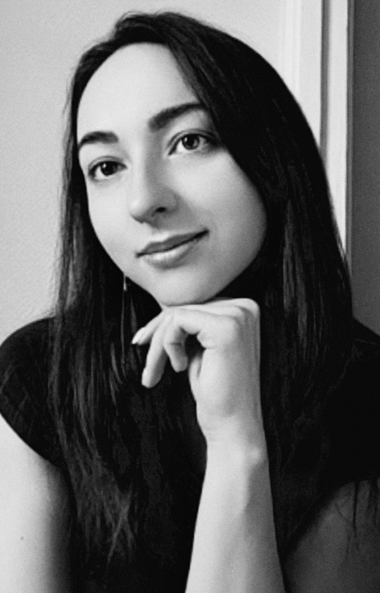
Makiyvka and the city of Donetsk.
January 2022. Answers provided in Ukrainian.
1. What was your summer like in 2014? What prompted you to leave or stay?
I understood very little that summer. I was 17 and had little understanding of the political circumstances, but from time to time waves of fear swept over me because of the uncertainty of the situation.
I remember walking with my mum around the city, which was already occupied, with barricades in some places, while the centre remained calm. We heard distant rumbling, but my mum said it was construction work. Later, we learned that those were explosions.
Interestingly, near our district, the sense of danger became more pronounced. Another situation involved the dormitory – I lived there for some time. It was a row of buildings near the large Donetsk park named after Shevchenko, where all the dormitories of Donetsk National University students were located.
After the students left, fighters of the so-called “DNR” began living there, along with their belongings, which they brought with them. I often wondered how comfortable it was for them to sleep on my couch and cover themselves with my blanket.
It seems that youth has the ability to switch off critical thinking. Even then, when I was not allowed to stay in the dormitory during the summer, the institution’s administration seemed to know about the “plans” for this accommodation.
I lived on the 14th floor and sometimes, with the window wide open, I played the Ukrainian anthem at full volume. It seemed to me that young people are capable of disconnecting reality in such moments.
We stopped walking in the park in the evenings when people in balaclavas carrying weapons started appearing there.
At the end of the summer of 2014, I finished my first year at university and went to live with my mum.
My boyfriend temporarily moved with his family to Myrhorod and persuaded his relatives to let him visit me in Donetsk. Love, you know. What danger could there be?
But things turned out differently. My mum sent me to live in Myrhorod with a family I didn’t know at all. Thanks to them for taking me in.
I was leaving because the word “attack” was heard everywhere, while my mum stayed because there was no other way out.
I took the last train from Makiivka, in a side berth in an open compartment. I listened all night to an unfamiliar woman snoring below me and shed a few tears.
It was my first time travelling alone by train, so I carried all my belongings with me, not even going to the restroom. I only had summer clothes and beautiful things with me, because I thought I would be back home soon. The irony.
2. Is there a story of yours or your close ones that you would like to share? What struck you the most?
Sorry for the repetition, but I would rather forget these “unforgettable impressions.”
For example, when I am in peaceful Myrhorod and, on one side, people are resting in sanatoriums, while on the other, young men from a village just across the railway tracks are being buried. And you can clearly hear the crying.
Or when contact with my mother is suddenly lost, and later it turns out that at that moment she was hiding in the basement, and a shell hit the house. Everyone survived, but there is an elderly grandmother in the house for whom it is very difficult to go down the stairs to the basement. She moves slowly, because she is frail and old. Do you know what speed means in a situation like an air raid? If not – it is life.
My mum always laughs when she recalls that time, but we know it is just a defence mechanism. She now lives not far from the Joint Forces Operation zone and says that we need to stock up on hair dye and coffee – just in case the war suddenly comes closer.
3. How did the year 2014 change your life?
It was catastrophic. It forced me to move, to change universities, to change my environment, and to reconsider values and human life. It changed me.
4. If you had the chance to go back to 2014, would you do something differently? If yes, what specifically?
I often think about this. And only recently have I forbidden myself to think that I could somehow have influenced that situation.
I have also forbidden myself to feel guilty for the deaths of people and their sorrow. So no, I would not change anything.
Perhaps I would not have permanently moved to Kyiv – but that can still be changed.
5. How do you feel about your life now? Do you have any regrets?
Somewhat confused – but that feels normal in our times. I regret my choice of university, because it determined where I would study and, consequently, where I would continue to build my life. I chose Kyiv simply because the transfer offer from there arrived first. At the time, it felt like fate, especially since my boyfriend had also moved there.
Moving to the capital changed me. Financial hardship and loneliness are not exactly favorable conditions for a young woman trying to adapt to adult life. It often felt as though the city was set against me, and despite its vast scale, there was no place for me in it. And the people – there were too many of them, and they seemed very rough, especially in their sense of humor. Or perhaps it was simply the process of growing up – who knows?
6. Do you plan your future? If yes, for what term?
No and no!
And I definitely do not plan to buy a dinner set for a future apartment. People who are renovating and think it’s their biggest problem make me smile. Because all renovations, apartments, all your possessions – they are such small and insignificant details that you can’t even imagine what might stay with you when you have to flee from your hometown.
For example, I carried my graduation shoes through rented apartments for another seven years after moving.
She declined to participate in the continuation of the project in 2024 without explaining the reasons.
The audio format of the stories will be available on the Unveiled Ukraine YouTube channel.