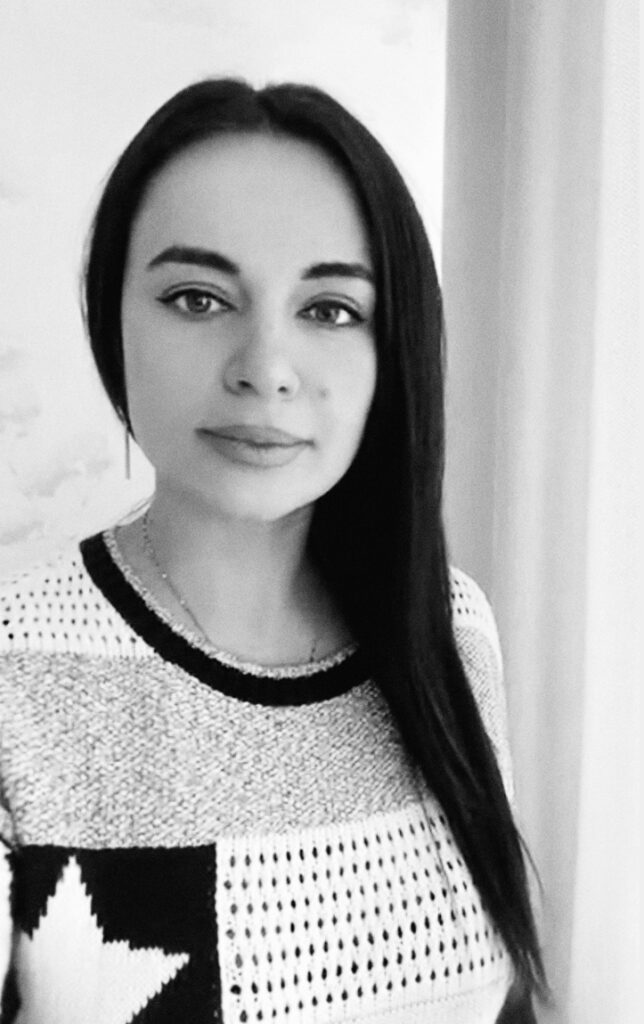
City of Sevastopol, Crimea
January 2022. Answers provided in Russian.
1. What was your summer like in 2014? What prompted you to leave or stay?
The summer of 2014 in Crimea was literally unreal. Rubles? Cossacks? Russian license plates on cars? Oh, go ahead, take everything: soon, I’ll open my eyes and recognize that it’s merely a nightmare. But since the “nightmare” didn’t go away, I simply couldn’t live in such a reality.
Russians were massively moving to Crimea. Sevastopol was captured by people from small and depressed towns in Russia hoping for a better life. Their hopes will never come true, but that’s another story.
2. Is there a story of yours or your close ones that you would like to share? What struck you the most?
I lived in Sevastopol with a wonderful view from my window. I could see the Streletskaya Bay as if it were in the palm of my hand. The sea view from the window is an eternal source of inspiration, but, as it turned out, also of fear. February 2014. I see the bay being blocked. I see many people in military uniforms without insignia. Russian military? But on television, they officially claim: they are not there. My friend’s father received an order to print license plates with the region code 92 (and this was before the announcement of the referendum), and it was absolutely clear that everything was already decided. Lies, deception right in front of you — there it is, under your window… But you can’t do anything about it.
3. How did the year 2014 change your life?
From the very beginning, I understood that staying there was impossible. I was born and lived in Crimea for 30 years at the time of annexation, and at the age of 32, I permanently moved to Kyiv. I miss my home, the safe and peaceful Crimea. Perhaps, I will never see it like that again.
4. If you had the chance to go back to 2014, would you do something differently? If yes, what specifically?
I wouldn’t change anything. There was a struggle for the truth. And it is still ongoing. I have always expressed my position openly. I lost some friends but gained new wonderful acquaintances.
5. How do you feel about your life now? Do you have any regrets?
I miss the sea outside my window a lot.
6. Do you plan your future? If yes, for what term?
I have always loved planning, but due to the new popular “disease,” I prefer to be open to the new here and now.
January 2024. Answers provided in Ukrainian.
1. On February 24, 2022, a full-scale invasion of Ukraine by Russia began. What was this day like for you? What were your feelings, and how did you react?
Perhaps every Ukrainian remembers this day in all its details. I already had experience with Russians in 2014, and while most Ukrainians were getting ready for barbecues, I had a step-by-step plan on how to keep my daughter safe. On this day, I was supposed to be abroad already, but the child’s father disagreed, so my daughter and I stayed home. And the plan was very simple—to reach Uzhgorod. It is the only place right on the border with NATO.
4:00 AM. The daughter woke up and cried. I comforted her, and she quickly fell asleep. I opened the news feed. “Putin signed a decree on the Armed Forces” at 4:15—I heard powerful explosions. Documents, food for the road, everything is ready. The child’s father lived nearby, so I knocked on the door: “Pack your things; it has begun.”
Around 7:00, we were already leaving together. He was driving, and I read the news aloud. Roads are congested, no fuel at gas stations. The day somehow passed; we were certainly nervous. For the first time in my life, I was nauseated by the voice. When I heard Zelensky, I felt nauseous. I couldn’t forgive the announced barbecues, neither on February 24 nor now. More precisely, no—not NOW (editor’s note—referring to Zelensky’s address to the Ukrainian people regarding the potential Russian military invasion in January 2022, urging Ukrainians not to panic and announcing peaceful plans for 2022 in which he noted that in the spring everyone will go to barbecue and celebrate the May holidays).
And the most wonderful thing happened around 10:00 PM when Google subtly suggested a route through villages to bypass congested highways. A few more cars went ahead of us through the villages. Everything was fine, but at some point, the cars in front of us got stuck. Yet, when it was necessary to stop, my ex-husband hit the gas. Stress, probably. We got stuck too. Now imagine this: the war has started, and we are stuck in the mud in the middle of a field with a two-year-old daughter. Night, cold. The Toyota in front of us drives out, and we only bury ourselves deeper. I wrote a post on Facebook—that’s all the strength I had left. But the strength of friendship and Google didn’t save us—a rescue team came for us on the night of February 24. They pulled us out three times; the third attempt was successful. I was not myself, so I didn’t remember the rescue vehicle’s number. Infinitely grateful to the rescue team.
2. Were you forced to leave Ukraine (perhaps temporarily)? If not, proceed to the next question. If yes, share your experience abroad: were you in one country the whole time, did you move to several countries, did you have to learn a new language, adapt to a new profession, etc.? Where are you now? Do you plan to return to Ukraine when the military actions end?
Over these 2 years, I have been to Slovakia, the USA in Ohio and Texas. But I returned to Europe. I discovered in myself that I am a very European person. I don’t want to say that life in the States is bad. It’s just completely different. I see my life only in Ukraine. I help as much as I can. I constantly feel guilty for doing little. But I do the maximum within my capabilities.
4. What changes and transformations have occurred with you (if any) as a person during these two years of full-scale invasion?
A lot has changed. After Bucha and Irpin, Mariupol, you just can’t be who you were before. That’s the first thing. The second is life abroad, an experience you bring back to Ukraine. Ukrainian children will be different when they return. In the USA, I became more confident. I respect my own and others’ borders more. The moral state was different; at some point, I needed psychological help. And only after the treatment course can I say that I have plans for the future. For a f***ing great future.
5. If you could go back to 2014, would you do anything differently?
In 2014, I wouldn’t change anything. I attended rallies in support of Eurointegration in my native Sevastopol, printed leaflets, bought medicine for our blocked units, and did a lot. And I never hid my views.
6. Do you plan your future? If yes, for what term? How do you envision the future of Ukraine?
As in the famous song: Ukraine – Mother.
She will endure. Behind us, there is light—it will overcome the darkness.
I love my country, and I will do everything for the future.
The audio format of the stories will be available on the Unveiled Ukraine YouTube channel.