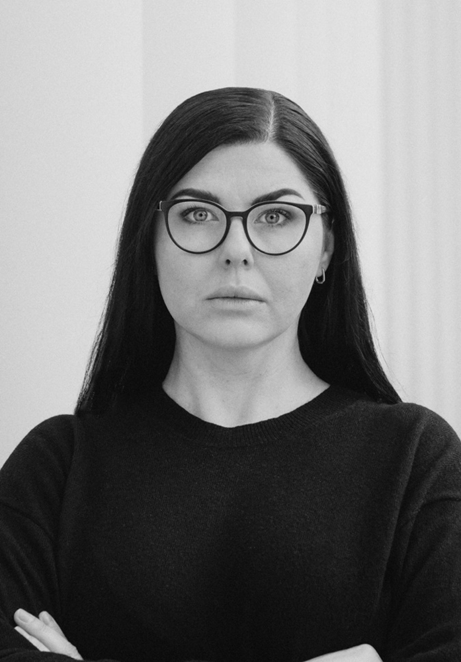
City: Luhansk.
January 2022. Answers provided in Russian.
1. What was your summer like in 2014? What prompted you to leave or stay?
The summer was full of cognitive dissonance, to say the least. It was during that summer that I realised HOW wrong I could be! But, I think it’s worth sharing a few things from earlier periods.
I`m Ukrainian, but was born in Kishinev, Moldova (that time USSR). When I was 10, my parents divorced, my mother and I moved to Luhansk (she was originally from the Luhansk region). After Kishinev, I felt very sad in Luhansk – it was cold, grey, and there were no tasty fruits (it was the 90s, and the situation was like that). But over time, I somehow got used to it, although I always felt like a stranger there.
In 2014, I was completing my third higher education in “Photography.” I was deeply involved in my graduation project on underwater photography. Many people were involved in the project: a makeup artist, a hairstylist, models, assistants. The first shoots took place at the end of January. I vividly remember everyone arriving in a gloomy mood. A sense of impending disaster. I sincerely believed that everything would be resolved, and things would soon return to normal, trying to convince everyone of that. The shoots and this project kept us busy (there was a lot of preparation), and we tried not to lose our minds over what was happening around us.
At that time, I also regularly went swimming three times a week. The pool was located about 200 metres from the square in front of the Security Service of Ukraine (SBU) building. Initially, on the sidewalk near this square (although it was more of a large intersection than a square), there was a tent with the inscription “Holy Rus,” where a couple of old women and some “odd-looking guy” (I don’t know how tolerant this word is now) were constantly “hanging out.” They just stood there with crosses and candles. It would have been very strange to approach them for anything. Also, on the building near the tent, handwritten posters with mistakes were attached, saying that we needed to save the children of Donbas. It all looked very absurd.
At some point, they brought in tires, and many people with automatic weapons. Soon, they seized the SBU building, buildings of other state structures, and border checkpoints (especially revolting was the seizure of the border unit in the Mirnyi quarter, a residential area in Luhansk – when “militants” with automatic weapons broke into people’s apartments, holding them hostage and shooting from their windows for a very long time). There was a realisation of how we organise promotions (advertising activities were my main occupation at that time in Luhansk), and some “agencies” organise revolutions. Everything went according to plan. There was no Ukrainian army in the city.
Bright moments from 2014:
My grandmother, my father’s mother, was a true “Banderite” (a person who opposed the occupation of Ukraine by the Soviet Union) and spent 12 years of her life in a labour camp. Then, for 10 years, she was prohibited from returning to Western Ukraine, so she, with her husband and children, moved to Lutugino (Luhansk region), where they lived very difficult and poor lives.
So, we had a strange family – one grandmother spent her youth in a labour camp, and the other cried when Stalin died. The one from Western Ukraine told me from childhood how her spine was broken twice in the camp, what she had to go through, and how she dislikes “Moscovites” because of it. On my part, I thought she was just an “unfortunate grandmother,” and such things could no longer exist because times had changed, and the USSR was long gone. Here we are, with Russia 40 km away from Luhansk, and everything is fine: we watch Russian channels, speak Russian, no one offends us, “peace, friendship, gum.”
How naive those judgments were…
I left Luhansk on June 26, 2014, for 4 days, then changed the return ticket for “3 days,” but on the day I was supposed to return, the bus station in Luhansk was bombed. Several acquaintances called me that day, explaining (with screams and tears) why it was not worth returning. And a few days later, a line of relatives and friends stretched to us in Dnipro, for whom we were a temporary shelter because many did not understand where to go next and what to do. That’s how the summer of 2014 passed.
2. Is there a story of yours or your close ones that you would like to share? What struck you the most?
In the spring, battles around the city began. In the summer, active fighting started in the city.
From the beginning of August, Luhansk had no water, electricity, food, or medicine. The summer in Luhansk was always very hot – scorching sun, very rare rainfall. People left the city, leaving many empty apartments where refrigerators defrosted, and meat spoiled from the heat… and in many apartments, pets left at home died from hunger and thirst. Can you imagine the stench in the city?
Constant shelling covered both the centre and other areas of the city.
I went to Luhansk during the second ceasefire in early September. It was necessary to take out cars, grab warm clothes, and the cat (he was with relatives for these 2 months).
I will never forget this trip. Lack of communication, electricity, water (there was barely any in our area), curfew, building destruction, mainly elderly people on the streets. Fear was in the air everywhere.
The most terrible thing was meeting acquaintances who significantly lost weight during these 2 months of blockade and shelling (not everyone had enough food supplies for such a period, and generally money). They aged by 20 years, and they had a completely different look in their eyes than before. I cannot convey it correctly in words, but in their eyes, one could read sorrow, despair, and fear. I felt it literally on my skin. And the endless sad realisation that you can leave from here, but many cannot.
I stayed in the city for a little over half a day (after 7 PM, there was a curfew), and I had to visit some people and do a lot of things. In the centre, the guys I wanted to visit turned out to be absent from home. I stood for a while, waiting for them on the balcony of the entrance, which led to the courtyard. People in the courtyard cooked food over fires (in this building, there were electric stoves), discussing who and how much stood in line for Russian humanitarian aid. A dog ran around the yard, with the same chain – thin and sad. Children played with a ball. I felt chills running through my skin from such “domestic” scenes of the new reality. I moved on.
Visited relatives (we lived in neighbouring buildings), met acquaintances. One told how he even had to help load corpses (he was just passing by on a bicycle) because they “asked” him for help.
Then I met a friend – a very intelligent and pleasant woman. She asked, “Where are you?” I said, “In Dnipro.” She took me by the hand, tears in her eyes, and said not to tell anyone about it because everyone is reporting, and they can take you “to the basement.” At that time, they drew conclusions about your views based on your location, and if you were, for example, in Rostov, everything was fine, but if in Dnipro – not okay. Although many people I met in my area were glad to see me and asked, and many did not like my answer, but still talked to me in a friendly manner.
At night, there was a terrible darkness and complete silence in the city. Very unusual for the city. Morally, it was extremely uneasy.
We left the next morning with adventures and rumours that the “city is closing,” and no one will be allowed to leave from today…
The road through the forest, LNR checkpoints, checkpoints, checkpoints (there were probably 14 on our way), then asphalt erased by tanks… I raised my eyes at the next checkpoint, and here it was written “PTN PNH,” and above it, the flag of Ukraine was drawn…
I burst into tears.
3. How did the year 2014 change your life?
2014 and 2016 were very stressful years for me, but I was very fortunate – during difficult times, my family, friends, acquaintances, and even strangers supported me. On the “path from Luhansk,” I met many worthy and wonderful people. It had a profound impact on me.
I remember feeling the same strange atmosphere in Luhansk when the battles were ongoing (even on the outskirts of the city), when windows cracked in apartments, and sirens at enterprises sounded day and night. It seemed to me that the whole world had “forgotten” about us, that everyone was indifferent, and that everyone “didn’t care.” Although my social media was flooded with messages of support. It did not ease the situation. It became easier when I left there. First to Dnipro, then to Kyiv. On my journey, I met many good and noble people who helped me in many ways and restored my faith in humanity. Now I try to act the same way whenever I have the opportunity. Definitely, I became more empathetic, nurturing a sense of being a decent human being.
There were many transformations, but the main change was the conscious desire to take responsibility for what happens in my life.
4. If you had the chance to go back to 2014, would you do something differently? If yes, what specifically?
I started to answer this question, but then realised it’s pointless, as they say, you can’t unscramble scrambled eggs. So no, I’ll leave everything as it is, but I will try to leave the past in the past.
5. How do you feel about your life now? Do you have any regrets?
I like my life. I feel whole. There are new ideas, projects, and the strength to implement them. I would like to do this in a peaceful environment.
I regret, of course. I regret that we will never gather as that family “pre-war” company at our country house. I regret that so many people have left during these years, that with some, there was not (or will not be) an opportunity to say goodbye, and that with some, I won’t be able to bring flowers to the grave because the territories are occupied.
6. Do you plan your future? If yes, for what term?
I plan, but not for a very long time.
But thinking about the future has become much more significant than before.
After everything I’ve been through, I have a sense that I can handle all the challenges that life will bring, and solutions will be found.
Because, as my acquaintance said, “As long as we are alive, many things are still possible!”
January 2024. Answers provided in Ukrainian.
1. On February 24, 2022, a full-scale invasion of Ukraine by Russia began. What was this day like for you? What were your feelings, and how did you react?
It’s strange to say because I had already seen Russians in my city and knew what they were capable of, but until the last moment, I didn’t believe that a full-scale invasion would happen. I, of course, prepared a little: stocked up on groceries, medicines, and everything necessary in advance, but I did it with hope and faith that it wouldn’t be needed and things would gradually normalise.
Despite reassurances from the authorities, the eve was very alarming. On February 24, 2022, I woke up to explosions. There was an unpleasant sensation in the stomach area. The thought “it has begun” and the instant realisation that right now is that moment after which all your plans will crumble, and life will change in an unknown direction.
Around 6 in the morning, a friend from the LNR called me, saying not to worry and endure for 3 days, that in 3 days everything will be calm again, and she’s not even taking her daughter from Kyiv. I love her, but hearing this was strange. I didn’t start discussing this topic, thanked her, and ended the conversation.
Then there was constant scrolling through the news, continuous updates on radio and TV, queues in stores, pharmacies, at the exits from Kyiv, and crowds at the train stations.
2. Were you forced to leave Ukraine (perhaps temporarily)? If not, proceed to the next question. If yes, share your experience abroad: were you in one country the whole time, did you move to several countries, did you have to learn a new language, adapt to a new profession, etc.? Where are you now? Do you plan to return to Ukraine when the military actions end?
At the beginning of the full-scale invasion, I didn’t plan to leave even from Kyiv: during each air raid alarm, my mother, our cat, and I would go down to the underground parking, sometimes sleeping in the car there. Friends and acquaintances from different countries wrote and called, offering help and shelter. However, I didn’t want to go anywhere because, for the third time in my life, I was being chased by Russian aggression (first was Transnistria in the 90s, which was very close to Chisinau, second was in Luhansk in 2014, and third was in Kyiv in 2022). One needs to face this challenge and not run away: despite the horror around, at that moment, I had an internal sense of calm and awareness that it would eventually end. I think this feeling was shaped by the experience of 2014. It seemed like Kyiv couldn’t be captured. Now, two years later, I understand that these thoughts were overconfident, and I was just lucky to stay alive and unharmed because my home was only 35 km away from Bucha.
The son of my mother´s friend (who went to Poland with her son´s children) called us several times a day, inviting us to her empty house near Lviv and persuading us to leave Kyiv. On March 7, 2022, we left. We covered the 530 km journey in 26 hours (it took 4 hours just to exit Kyiv, and the next morning I slept 3.5 hours in the cold car because I couldn’t physically drive anymore due to exhaustion). A few days after we arrived, my mother`s friend returned from Poland with her grandchildren because the kids missed their parents and wanted to go home. My mother`s friend and her family treated us wonderfully, and if it weren’t for the war and the events of 2022, it could have been a wonderful trip. But it wasn’t: there were constant air raid alarms, rockets nearby, endless awful news, worry for friends in occupied territories, concern for friends in Kyiv and other cities, the painful death of the cat in my arms, terrible stories from acquaintances who left Mariupol and Severodonetsk, and constant funerals of soldiers from that village.
I was constantly busy with something: selecting photos from the archives, preparing and uploading photos to stock sites, coordinating various processes (someone was constantly turning to me with different questions), participating in some media projects, and much more. But this time felt like a time vacuum: I didn’t understand how long we would stay there and how to plan life further. We stayed there until the end of April, then returned to Kyiv. On the way back, we travelled the destroyed Zhytomyr road, visited the ruined “Dobropark” dendrological park in Motyzhyn, which was under Russian occupation. Horrible impressions that will stay with you forever.
In Kyiv, my activity was intense: I participated in several volunteer projects, had a lot of photo work, restarted conversation clubs, and was happy to see my friends and spend time with them.
In August, I visited Bucha, Irpin, Nemishaievo, Borodyanka for the first time. I returned there not once, but was most affected by the stories of local residents who went through the horrors of occupation, lost their loved ones, remained homeless, and were in a difficult financial situation, yet the authorities treated them with disdain. I was extremely surprised that leaders like Emmanuel Macron, Marija Pejčinović-Burić, Gitanas Nauseda, Boris Johnson, and many other world leaders visited Borodyanka, but the government did nothing, even allowing volunteer organizations to install windows. I reached out to several well-known media outlets, which were already investigating corruption schemes related to reconstruction in the Kyiv region at that time. It deeply affected me; it was painful. During times when the best were dying on the front, society was uniting in the fight against the enemy. There was so much sorrow around; some were simply stealing money…
On October 10, 2022, the situation completely changed: mass rocket attacks began. This put an end to all my work, activities, electricity, internet, and heating. Electricity was gradually restored according to schedules, but normalcy and life were far away.
With the onset of mass shelling, my internet acquaintance started writing to me and offering help. We had occasionally corresponded about the military situation before. We began to communicate, and he invited me to spend New Year’s in Luxembourg (meeting in Poland, for example, was difficult as he was a single father, and no one helped with the child). The trip was challenging but beautiful; crossing the border took 18 hours. I returned to Kyiv, and he invited me to his birthday at the end of February. In early February, he said, “You’re sitting there without a job, pack your things and come by car, live with me, learn French, find a job” (he showed my work to friends, and they all assured that I would find clients in Luxembourg). This offer was a big surprise. I thought for two days, decided that it was a good option, fixed the car, gathered my belongings, closed all current issues, and started a 2000 km journey. After crossing the border with Poland, I cried and couldn’t stop; I felt sorry for Ukraine, and it was bitter to understand the horror happening just 200 meters beyond the Polish border throughout the entire territory of Ukraine.
Two days later, I was in Luxembourg, a country where I knew only two people: my acquaintance and his son. In two weeks, my acquaintance asked me to move out. In another two weeks, I moved out. I was not prepared for such a situation at all but decided to stay in Luxembourg and test myself. I went to a refugee camp, from there, I was resettled in a dormitory… I definitely was not prepared for this, and I went far beyond my comfort zone. There were a lot of stresses, new experiences, new information, trials, and difficulties, but it’s an entirely different story that I will call “downshifting in Luxembourg.” But Luxembourg is a very caring, friendly country that supports and offers many opportunities. Despite all the difficulties, I plan to stay here. Also, grateful to every person who supported me here – in Luxembourg!
Initially, I was very angry with my acquaintance, but then I realised that if not for him, I would never have left Ukraine because I believed my energy was needed there. Now I understand that I can do much more for Ukraine being in Luxembourg.
Luxembourg also showed me another reality where many people from different countries experiencing military conflicts are often invisible to the world. It prompted me to an internal question: after the end of the war in Ukraine, will we be more sensitive, caring, and concerned about people from countries experiencing military conflicts? I hope so.
4. What changes and transformations have occurred with you (if any) as a person during these two years of full-scale invasion?
In my opinion, I handled the situation well: organised, without tantrums, and as calmly as possible. There were moments when I did not want to live in such a world; I remember it clearly. They weren’t many, but every time I agreed with myself to get out of bed and start doing something. I also always thought that this is exactly what the Russians want from us (not having the desire to live and not to live).
These moments included the news in March 2022 about the rape of children (in fact, the Russians raped everyone: women, men, the elderly), torture, and killing of civilians; it was very difficult to accept the situation in Mariupol. For several days, I could not sleep, and I felt physically sick. The destruction of Kakhovskaya HPP destroyed me from the inside. I was aware of the scale of the disaster and how many people, animals, and land were affected. The realisation that someone is drowning at the very moment when I read these news lingered in my mind. There were many other incredibly difficult news that broke my heart every time, but I learned to interact, cope, and motivate myself to do something further.
The story by the BBC about the burning of Borodyanka and the people under the rubble in the freezing cold, whom no one came to help because they were already occupied, is still in my head. The red manicure of a murdered civilian woman in Bucha, a photo of the nailed paws of a dog that was eaten by Buryats, photos of killed people, explosions, exhumations, and funerals… And I also think that I will never forget what I saw with my own eyes: Zhytomyr highway, Borodyanka, burials under the numbers in Bucha, and much more.
There have been a lot of transformations. In March 2022, an old friend of mine switched to the Ukrainian language in communication; then, an old friend did the same after the occupation – they motivated me to start communicating in Ukrainian. It was especially disgusting to use Russian after all the news about what the Russians were doing in Ukraine. But there were still two languages in everyday life. My dorm roommate also switched to Ukrainian because the entire company she worked for in Ukraine switched to Ukrainian. And I was also very motivated to meet a Ukrainian-speaking Finn who speaks Ukrainian perfectly. I told my mother about it (because many people in Ukraine say that it is very difficult for them to switch to Ukrainian). The next day, my mother, who spoke Russian before, offered to switch to Ukrainian.
There have been a lot of changes, but now, thanks to all the difficulties, I realize the strength I have. Recently, the last grandmother in Luhansk died, and I am bitter about it: there was no opportunity to say goodbye, and there is no opportunity (time and place) to mourn it. But this was not the only loss in the last 10 years – there were many, many losses. So I understand that I currently have a large number of unprocessed injuries.
5. If you could go back to 2014, would you do anything differently?
I should have acted differently! It seems to me that one of our biggest thinking mistakes (mistakes of Ukrainians) is that we were, and sometimes still are, tolerant towards Russians and everything they try to bring and impose. We believed they were human. That’s not the case. These beings only understand the language of power and violence, nothing else. By the way, I still can’t comprehend the level of sadism, cruelty, animal aggression, and tyranny that the Russians exhibit in Ukraine. I can’t imagine any reason for such behaviour; it still doesn’t make sense to me.
Interaction with them should be built radically: there should be nothing Russian in Ukraine — no language, no culture, no propaganda, no narratives… nothing. We must close everything possible for them both in Ukraine and beyond its borders, because only such decisions can secure our future. The scenarios of the Russians are the same: occupy territories, destroy language and culture, populate with Russians, impose Russian language on locals, and then go on to “save” the Russian-speaking population from… (you can insert whatever you like: gays, the decaying West, NATO, nationalists, fascists, aliens…).
We should have rallied, protested, and shaken this separatist boat instead of passively accepting reality. But back then, I sincerely didn’t believe that all this could happen. Also, we should have taken a more responsible approach to finances.
6. Do you plan your future? If yes, for what term? How do you envision the future of Ukraine?
Time in Luxembourg was challenging, especially at the beginning. However, this time was rejuvenating and inspiring: here, I could finally sleep normally (yes, my air raid app still triggers sometimes, but there is no direct threat to my life here). I met many wonderful people, saw opportunities for the development of my activities in both photography and promoting my board game. Here, I can engage in volunteer activities and do much more. I found myself in a healthy, productive, inspiring, and supportive society. I see respect and a lot of positive things around, witnessing the state’s attitude towards its citizens. It’s a unique multinational place where everyone gets along, and half of the country’s population consists of expatriates. I would like to bring this experience back to Ukraine.
Luxembourg does a lot for Ukraine and Ukrainians, but few people know about it, so I share with my friends and acquaintances so that they don’t feel that the world has forgotten them and left them alone with the Russian invasion (sometimes they feel that way).
I’ll say this: my ideal future is a life and projects in two countries: Ukraine and Luxembourg. I know that Ukraine can also offer a lot to Luxembourg. Currently, there’s a lack of resources, but I believe that over time, Ukraine can become a reliable and fruitful partner because there is great potential for it. Also, we know almost nothing about Luxembourg, so it would be good to have a cultural exchange: show Ukrainians the culture and traditions of Luxembourg, tell them about its history, and share success stories.
In many places, I see the phrase: “Luxembourg – Let’s make it happen.” It perfectly characterises Luxembourg and always inspires me. So, I hope Luxembourg will continue to support Ukrainians in the fight against the Russian invasion in Ukraine. How do I see the future of Ukraine? The way we make it.
When the war ends, I believe Ukraine will be rebuilt and become a space for development and growth.
Let’s make it happen.
The audio format of the stories will be available on the Unveiled Ukraine YouTube channel.